






By JKV Travel
Standing tall above the rolling Sahyadri ranges, Torna Fort – also known as Prachandagad – is not just a trekker’s paradise, it’s an emotion for every history and mountain lover. This is the first fort won by Chhatrapati Shivaji Maharaj as a teenager, the place where the bold dream of Hindavi Swarajya truly started taking shape. With mist-kissed cliffs, ancient temples, thrilling machis and sweeping valley views, the Torna Fort trek gives you the perfect blend of adventure, heritage and raw natural beauty in one unforgettable journey.
If you’re searching for a trek near Pune that combines challenging trails, historic stories, peaceful temples and dramatic viewpoints, Torna Fort should be at the top of your list.
Long before Torna became a popular trekking spot, it was one of the most important hill forts in the Maratha history. As a young leader, Chhatrapati Shivaji Maharaj captured Torna Fort at around 16 years of age, marking his first major victory and the beginning of his mission to establish Swarajya.
Later, the fort was expanded and strengthened, earning the name “Prachandagad” – the “massive fort”. The towering walls, strong bastions and long, sharp machis reflect why this fort was such a strategic asset. Every stone on Torna seems to whisper tales of planning, courage and battles that shaped the future of Maharashtra.
Torna Fort is located in the Pune district of Maharashtra, in the heart of the Sahyadri (Western Ghats).
Nearest major city: Pune
Base village: Velhe
Distance from Pune: around 60–65 km (via Nasarapur or Pabe Ghat)
Approx. height: about 1,400+ metres above sea level – one of the tallest forts in the region
The journey to the base itself is scenic, with winding roads, small villages, farmlands and layers of hills rising in the distance. As you approach Velhe village, the massive silhouette of Torna Fort dominating the skyline instantly excites any trekker.
The Torna Fort trek is loved by both beginners (with decent fitness) and experienced trekkers because it offers:
A moderate level of difficulty
A mix of mud trails, rocky sections and steep climbs
Breathtaking panoramic views from machis and bastions
A strong dose of Shivaji Maharaj history and heritage
Trek basics at a glance:
Starting point: Velhe village
Trek duration (one way): about 4–6 hours depending on pace and breaks
Trek distance: roughly 6–7 km from base to top
Difficulty: easy–moderate to moderate (a few steep and exposed patches)
What makes the Torna trek special is how quickly it shifts from gentle fields to adventurous rocky stretches, then opens up suddenly into mind-blowing views once you reach the fort.
The climb to Torna Fort from Velhe is a journey that keeps changing in mood and scenery.
Through Fields and Grassy Slopes
The trek starts with a walk through farmlands and open meadows. The trail is gradual, perfect for warming up your legs as you leave the village behind and slowly gain height. Early in the morning, this section feels fresh and peaceful, with village sounds fading into the background.
Climbing into the Hills
As you move further, the trail turns steeper and narrower. You start walking on rocky paths and earthen steps, with hills unfolding around you. In the monsoon months, tiny streams and waterfalls appear along the way, adding to the charm.
Rock Patches and Narrow Paths
Near the top, the route becomes more exciting. There are a few rocky sections and exposed patches where you need to climb carefully, especially if the rocks are wet. This is where your trekking shoes, balance and focus really matter.
Final Ascent to the Entrance Gate
The last stretch to the main entrance of Torna is thrilling – a narrow trail with the valley dropping away on one side in places, strong winds brushing past and the fort walls getting closer with every step. Reaching the gate with prayer flags and fort walls towering over you is an absolutely satisfying moment.
Local guides are often available at Velhe and are very helpful, especially in monsoon or when visibility is low due to fog or clouds.
Torna is not just a fort; it’s also a spiritual destination for local villagers and devotees.
Once you reach the top, one of the first important structures you see is the Menghai Devi temple, also known as Tornaji temple. This temple is dedicated to the presiding goddess of the fort and is deeply respected by locals.
Trekkers often:
Rest here after the steep climb
Offer prayers and thanks for a safe journey
Spend a few quiet moments soaking in the peaceful atmosphere
The sound of ringing bells, colourful flags, and the sight of clouds floating below the fort gives this temple a very special, almost dreamy feel.
As you explore further, you’ll come across:
Smaller stone shrines dedicated to local deities
Remains of sadar (meeting hall) and residential areas
Old bastions and watch points used during the Maratha era
These temples and ruins transform the Torna Fort trek from a normal hike into a meaningful walk through history and faith.
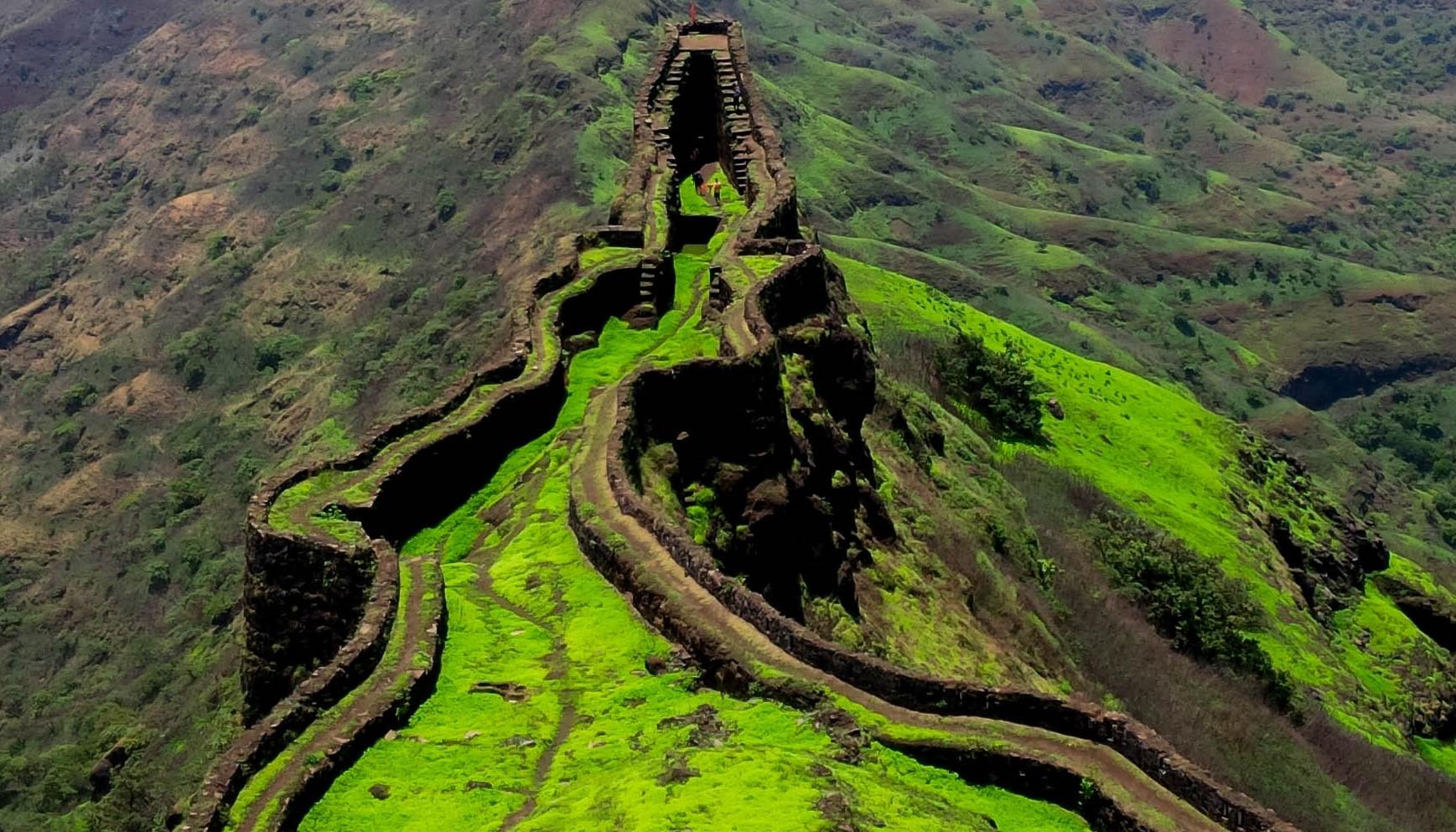
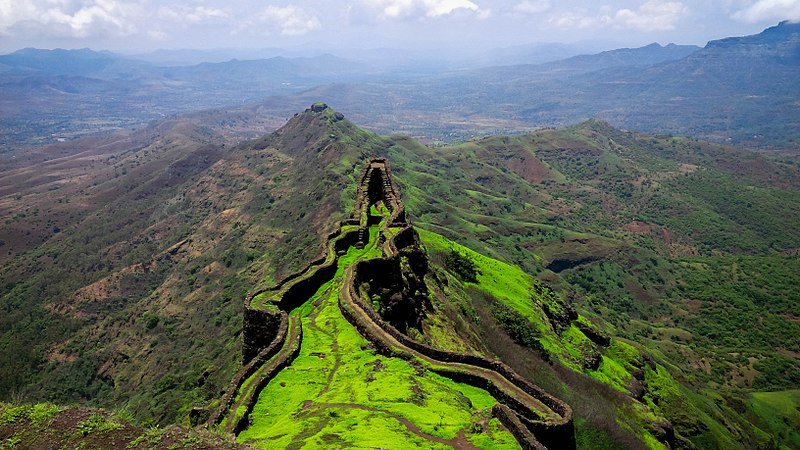
What sets Torna apart from many other forts are its famous machis – long fortified spurs that stretch out like arms into the valley. They are the main highlight for many visitors.
Zunjar Machi is the most popular machi on Torna. As you walk along its narrow, winding stretch of walls and steps, you truly understand why the fort was considered so powerful.
From Zunjar Machi you can:
Enjoy 360-degree views of deep valleys and rolling hill ranges
Spot other legendary forts like Rajgad, Purandar, Lingana, Sinhagad on a clear day
Click some of the most dramatic photos of your trek
However, this section can be windy and exposed, especially in monsoon, so it is important to move carefully and avoid risky selfies or going too close to the edge.
The other popular spur is Budhla Machi, named for its pot-like shape. Walking towards this section gives you a wide, open feel.
Here, you can:
Sit on the edges (at a safe distance) and admire layered ridges of the Sahyadris
Watch changing colours of the sky around sunset
Capture wide-angle shots of the fort walls and cliffs
Both machis show how smartly the fort was designed for surveillance and defence – you can literally scan the surroundings for kilometres from these points.
Once you reach the fort, don’t rush back after a quick photo. Torna has plenty to explore:
Bini Darwaja & Other Gateways
The main entrances with old wooden doors and stone arches give you a sense of the fort’s strength and age.
Menghai Devi / Tornaji Temple
The religious heart of the fort, where locals and trekkers bow their heads.
Sadar (Meeting Area) Remains
Ruins that remind you this was once a fully functional administrative and residential space.
Water Cisterns and Rock-Cut Tanks
Ancient water storage systems that allowed people to live and fight from this height for long durations.
Zunjar Machi & Budhla Machi
The most thrilling sections of the fort, offering stunning viewpoints and photo spots.
Views of Nearby Forts
On a clear day, spotting Rajgad, Raigad and other surrounding forts is a delight for any fort lover.
Exploring Torna slowly lets you feel the scale and intelligence of Maratha fort architecture.
FAQs About Torna Fort Trek – By JKV Travel
1. Why is Torna Fort famous in Maratha history?
Torna Fort is famous because it was the first fort captured by Chhatrapati Shivaji Maharaj at a young age. This victory is considered the starting point of Hindavi Swarajya and marks an important milestone in Maratha history.
2. What is the difficulty level of the Torna Fort trek?
The Torna Fort trek is generally rated as moderate. The route includes steep climbs, rocky sections and a few exposed patches, especially near the top and around the machis. Beginners with decent fitness can attempt it, but it’s more comfortable for trekkers who have done at least one or two treks before. Good shoes, proper hydration and starting early make the trek much easier.
3. What is the best time to visit Torna Fort?
The best time to visit Torna Fort is from October to February, when the weather is pleasant and views are clear. Monsoon months (July to September) are extremely beautiful with green trails, waterfalls and clouds, but the trek becomes more slippery and challenging. Summer (March to June) is hotter, so if you go in this season, start trekking early in the morning and carry extra water.
4. Is Torna Fort safe for beginners and solo trekkers?
Torna Fort is popular and many trekking groups visit it regularly, especially on weekends. For beginners and solo trekkers, it is generally safe if you:
Start early and follow the main trail
Wear proper trekking shoes
Avoid risky edges and steep drops
Trek with a group or hire a local guide if you are unsure of the route
With basic precautions, Torna Fort trek is a rewarding and memorable experience even for first-timers.
To make your Torna trip comfortable, safe and memorable, keep these tips in mind:
Start early in the morning to avoid heat and to have plenty of time to explore the fort.
Wear proper trekking shoes with good grip – this is very important for the rocky and steep patches.
Carry enough water and snacks; don’t completely depend on stalls.
Pack a light raincoat or windcheater if you’re trekking in monsoon or winter.
Avoid risky photos on machis and cliff edges, especially when it’s windy or foggy.
Respect the fort and temples – no littering, no loud music, no damage to walls or structures.
A responsible trek ensures Torna remains beautiful and safe for everyone.
If you are searching for a place where trekking thrill, natural beauty and real history meet, Torna Fort is that destination.
Here, you climb along ancient stone steps, pass through clouds and swirling winds, bow your head at hilltop temples and stand on long machis that once guarded Swarajya. Every viewpoint gifts you a new angle of the Sahyadris; every wall and bastion reminds you of the courage and vision of Chhatrapati Shivaji Maharaj.
Torna is not just a fort you visit.
It’s a fort you experience, respect and remember.
Also Read
1) Pratapgad Fort: Unveiling the Historic Hill Fortress Near Mahabaleshwar – Dive into another chapter of Maratha glory as you explore Pratapgad’s towering bastions, lush forest trails and stunning views over Mahabaleshwar.
2) Ratangad Fort Trek with Bhandardara Sightseeing: Umbrella Falls, Wilson Dam & More – Plan a dreamy escape to Ratangad and Bhandardara with scenic treks, misty valleys, waterfalls and serene lakes that perfectly complement your Torna Fort adventure.