






By JKV Travel
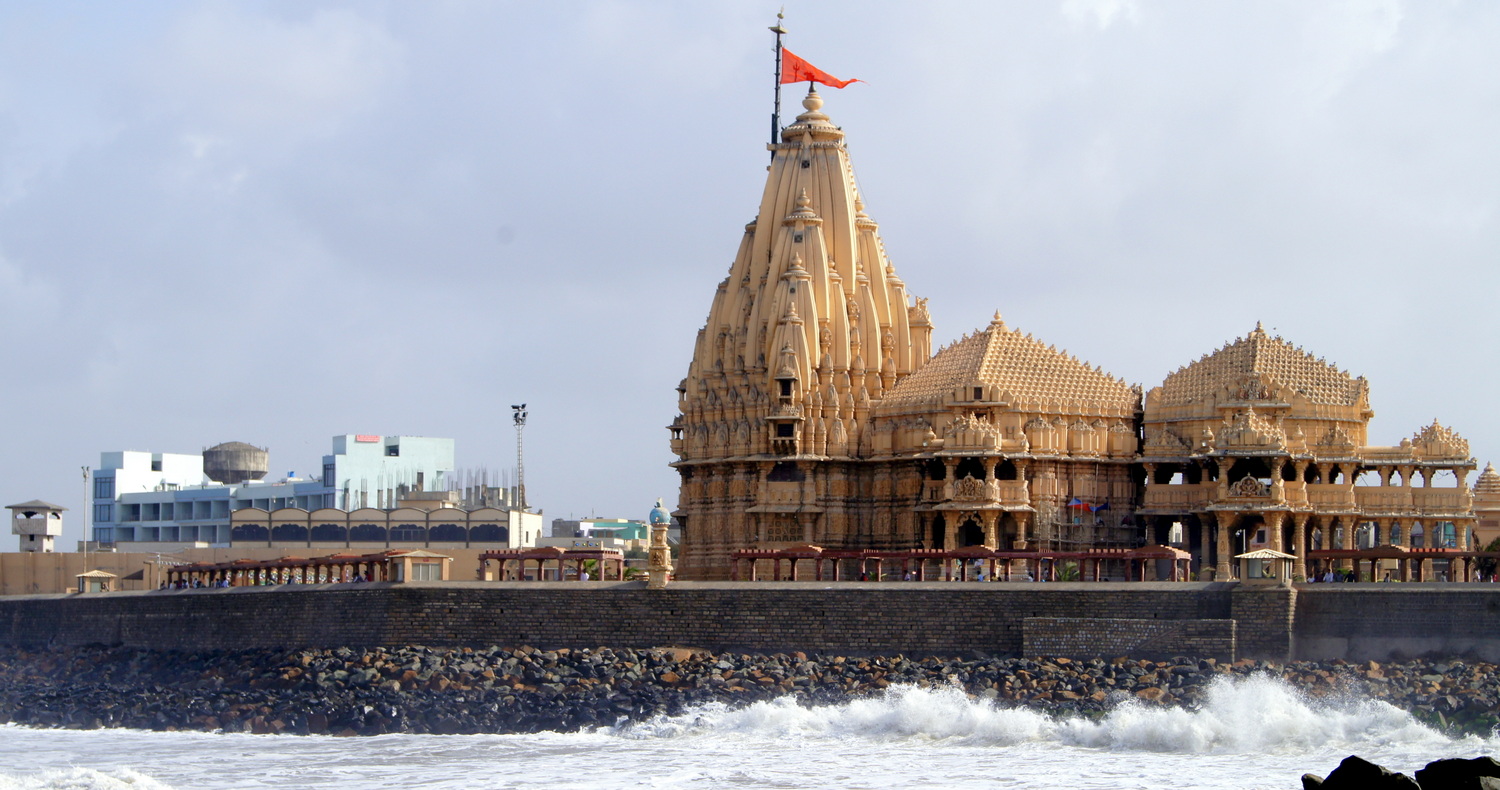
Somnath isn’t just a temple – it feels like a meeting point of faith, history, and the endless Arabian Sea. As you walk towards Somnath temple, the sound of waves, the sacred chants, and the sight of the golden flag fluttering above the shikhara instantly create a sense of peace. For many devotees, visiting Somnath Jyotirlinga is a lifelong dream; for travelers, it’s one of the most beautiful coastal temples in India.
Shree Somnath Temple is located at Prabhas Patan, near Veraval, in the Gir Somnath district of Gujarat. The temple stands right on the coast of the Arabian Sea, giving it a dramatic and serene seaside setting.
State: Gujarat, India
District: Gir Somnath
Nearby Town: Veraval
Because of its location, Somnath temple place feels like a natural viewing point where you see the ocean stretching endlessly ahead and the magnificent temple rising behind you. Sunrise and sunset here are especially stunning.
The word Somnath means “Lord of the Moon”. According to ancient legends, Chandra (the Moon God) worshipped Lord Shiva here to get relief from a curse and regain his brilliance. Pleased with his devotion, Lord Shiva appeared and took the form of Somnath Jyotirlinga.
Somnath is considered:
The first of the 12 Jyotirlingas of Lord Shiva in India
One of the most important pilgrimage centers for Shiva devotees
A sacred tirtha, believed to be located near the mystical confluence of rivers at Prabhas Kshetra
For devotees, a darshan at Somnath Jyotirling temple is not just about visiting a shrine; it’s about experiencing deep inner devotion and a sense of spiritual cleansing.
The story of Shri Somnath Temple is a powerful reminder that faith can survive anything. Over the centuries, this temple has been destroyed and rebuilt several times, yet it continues to stand proudly on the coast of Gujarat.
Ancient texts and legends mention Somnath as a very old and important Shiva temple.
Historical invasions led to repeated attacks on Somnath temple, but every time, local rulers and devotees came together to rebuild it.
The present structure of Shree Somnath Temple was reconstructed in the Chalukya / Solanki style and consecrated in the 20th century.
When you enter the temple complex, you’re not just walking into a building. You’re stepping into centuries of history, struggle, devotion, destruction and rebirth – all tied to this sacred coastline.
The current Somnath temple Gujarat is a beautiful example of traditional Indian temple architecture. Built in the classic style with intricate stone carvings, tall shikhara and detailed pillars, the temple looks majestic against the backdrop of the sea.
What you’ll notice inside and around the temple:
Main Sanctum (Garbhagriha):
The heart of Shree Somnath Temple is the sanctum where the Somnath Jyotirlinga is installed. Devotees stand in long but well-managed queues, offering bilva leaves, flowers, and their prayers to Lord Shiva.
Sea-Facing Area:
Just outside the temple, there is a platform from where you can look straight into the Arabian Sea. Standing here, listening to the waves, you really feel why this Somnath temple place is so special.
Arrow Pillar (Baan Stambh):
A pillar marks the line showing that there is no land between Somnath and the South Pole in that straight direction. It adds to the unique identity of the temple’s location.
The combination of sacred architecture, salty sea breeze and the constant chanting of mantras creates a magical, meditative environment.
The popularity of Somnath temple Gujarat means it is well connected by air (via nearby airports), rail and road.
There is no dedicated airport in Somnath itself, but you can fly to:
Diu Airport – roughly 80–85 km away
Keshod Airport – around 55–60 km away
Other larger airports like Rajkot or Porbandar can also be used as entry points
From these airports, taxis, private cabs, and buses are easily available to reach Shree Somnath Temple.
The nearest railway station is Veraval / Somnath railway station, which is around 6–7 km from the temple complex.
Veraval has direct and connecting trains from many cities in Gujarat and other parts of India. From the station, you can take an auto-rickshaw, local taxi, or shared transport to reach Somnath temple place comfortably.
Somnath is well linked by road to major cities in Gujarat:
From Junagadh – approximately 80–85 km
From Porbandar – around 120 km
From Rajkot – about 190–200 km
From Ahmedabad – roughly 400–410 km
State transport buses, private buses, and tourist vehicles regularly operate on these routes. Many tour operators design Somnath–Dwarka–Porbandar–Gir packages that cover multiple spiritual and wildlife destinations in one trip.
You can visit Somnath Jyotirling temple any time of the year, but some seasons are more comfortable and enjoyable.
October to February (Winter):
The best time to visit. The climate is pleasant and ideal for temple darshan, walking near the sea, and sightseeing.
March to June (Summer):
Daytime can be hot, especially in the afternoon. Prefer early morning or evening darshan during this season.
July to September (Monsoon):
The weather becomes cooler and the sea looks dramatic. It may rain, but the temple itself remains open and active for darshan.
During major festivals like Mahashivratri, Shravan month, Kartik Purnima and other important Hindu dates, Shri Somnath Temple gets beautifully decorated and extremely crowded.
The surroundings of Somnath temple place offer several other spiritual and historical sites, making it easy to plan a full day of sightseeing.
Triveni Sangam is believed to be the confluence of three rivers – Hiran, Kapila and the mystical Saraswati. Many devotees like to visit this spot or take a holy dip before going for darshan at Shree Somnath Temple.
Bhalka Tirth is associated with the final earthly moments of Lord Krishna, where he was struck by an arrow. A peaceful temple marks this sacred location. It’s a calm place for reflection and prayer.
This temple is dedicated to Lord Krishna and is known for inscriptions of the verses of the Bhagavad Gita on its walls. The atmosphere here is quiet and ideal for meditation or reading.
Just a short walk away from Somnath temple Gujarat, Somnath Beach is perfect for an evening stroll. You can enjoy street food, camel rides, small stalls, and the sight of the temple glowing in evening lights. Swimming is generally not recommended here due to strong currents, but the view is beautiful.
For history lovers, this museum showcases sculptures, ancient pieces, and objects linked to the old temples and settlements around Prabhas Patan. It adds depth to your understanding of how important this region has been over centuries.
If you have extra days, you can also plan a visit to Gir National Park (home of the Asiatic lions) or combine Dwarka–Somnath as a complete Gujarat spiritual circuit.
FAQs About Somnath Temple Gujarat - By JKV Travel
Answer: Somnath temple Gujarat is famous because it is considered the first of the 12 Jyotirlingas of Lord Shiva in India. Known as Somnath Jyotirlinga, this sacred shrine has been mentioned in ancient texts and celebrated for centuries as a powerful pilgrimage center.
Answer: Darshan at Shree Somnath Temple typically begins early in the morning and continues till late at night. The temple usually opens around 6:00 AM and closes between 9:30 PM and 10:00 PM. Aartis are performed multiple times a day, most commonly in the morning (around 7:00 AM), mid-day (around 12:00 PM) and evening (around 7:00 PM). Timings can change slightly depending on the season and temple management, so it’s always a good idea to check the latest schedule on arrival or from the official information sources before planning your Somnath Jyotirlinga darshan.
Answer: There is a lot to explore around Somnath temple Gujarat. Popular nearby spots include Triveni Sangam (the sacred confluence point), Bhalka Tirth (associated with Lord Krishna’s final moments), Gita Mandir, Somnath Beach, and the Prabhas Patan Museum. Many travelers also extend their trip to Gir National Park to see Asiatic lions, or combine Dwarka–Porbandar–Somnath in one spiritual circuit.
Answer: Yes, many pilgrims plan a combined Dwarka–Somnath yatra. You can travel by road or train between the two cities and cover both Somnath Jyotirlinga and Dwarkadhish Temple in a 3–4 day Gujarat itinerary.
Somnath is more than a destination – it feels like a timeless connection between the devotee and the divine. The powerful presence of Somnath Jyotirlinga, the long and inspiring history of Shree Somnath Temple, the beauty of the Arabian Sea, and the surrounding spiritual sites together create an experience you don’t easily forget.
Whether you come here as a pilgrim seeking blessings or as a traveler exploring Gujarat’s coastline, Somnath temple Gujarat will leave you with a deep sense of peace and awe. From your first darshan of the jyotirlinga to your last glance at the illuminated temple by the sea, Somnath gently calls you back again and again.
Also Read
Rann of Kutch to Gir National Park: Best of Gujarat in One Trip
If you’re already planning a spiritual journey to Somnath, don’t miss our Gujarat road trip guide that connects the white sands of the Rann of Kutch, the wild jungles of Gir and the sacred coastline in one unforgettable itinerary.