


By JKV Travel
Jodhpur, Rajasthan – famously known as the Blue City of India – is one of those places that instantly captures your heart. As you enter the old part of the city, you’ll see endless blue-painted houses, narrow lanes buzzing with life, and the mighty Mehrangarh Fort watching over everything. This unique combination of colour, culture and history is what makes Jodhpur truly special.
Let’s explore why Jodhpur is called the Blue City, the story behind its blue houses, how the Jodhpur weather influenced this tradition, the best viewpoints to enjoy those blue views, and the top places to visit in Jodhpur for an unforgettable trip.
Why is Jodhpur Called the Blue City of India?
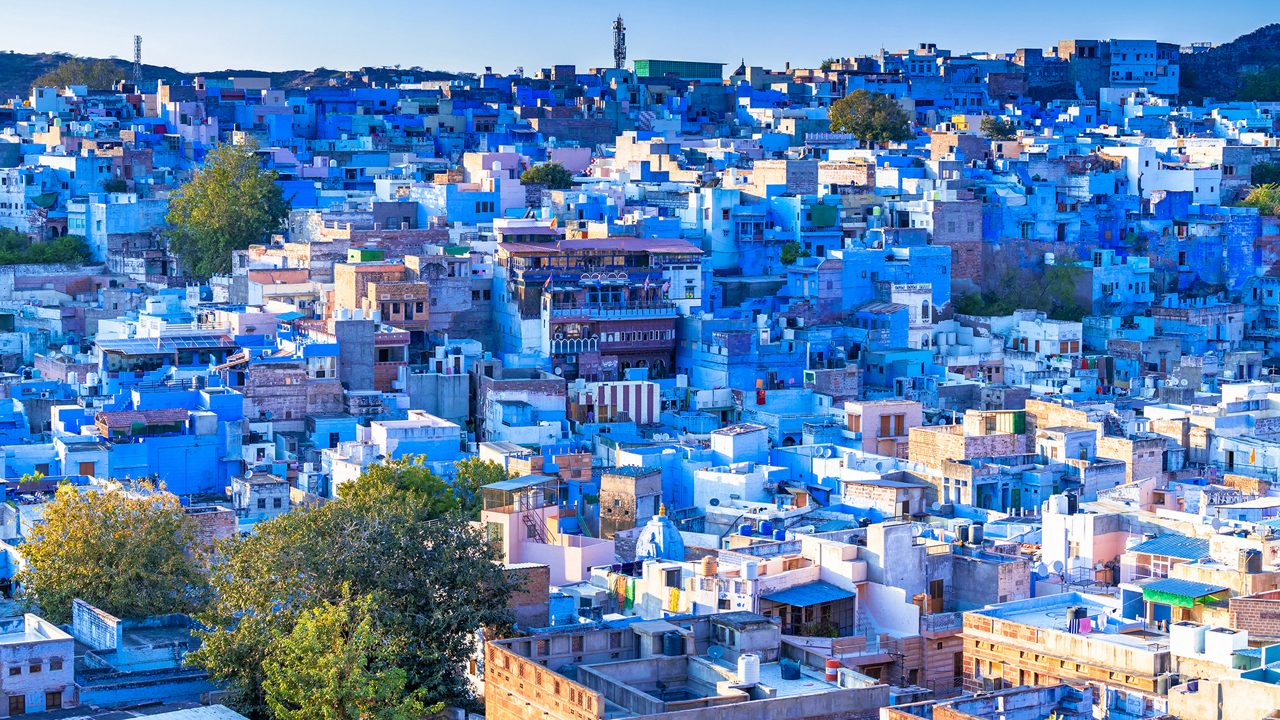
When you look down at the old city from Mehrangarh Fort, you’ll see a beautiful sea of blue houses stretching across the landscape. This is the main reason Jodhpur is called the Blue City of India, but there’s more to it than just aesthetics.
In the past, many of the blue-painted houses in Jodhpur, Rajasthan belonged to Brahmin families. Painting the walls blue was a way to show identity and status. Slowly, other communities started using the same colour, and over time, entire lanes turned blue.
Now, the blue colour is less about caste and more about culture and charm. It has become a symbol of Jodhpur itself – a visual identity that attracts travellers, photographers and storytellers from all around the world.
The next big reason for the blue walls is the hot desert climate. Summers here can be very intense, and Jodhpur temperature often shoots above 40°C. In such heat, people needed a natural way to keep their homes cooler.
The blue lime wash traditionally used on the walls is believed to:
Help reflect sunlight, making homes slightly cooler
Add a soothing, calming look in the harsh daytime brightness
Help protect walls from insects and heat over time
So, the blue shade is not just pretty – it’s also a practical response to Jodhpur weather and strong desert sunlight.
For many people, blue is also a spiritual colour – associated with the sky, water and certain deities. It gives a feeling of peace and infinity. When you walk through the blue lanes of Jodhpur, you often feel that same calm, even though the streets are full of life.
All these stories together – tradition, climate and belief – beautifully explain why Jodhpur proudly wears the title of Blue City of India.
To really feel why Jodhpur is called the Blue City, you must see it from multiple angles – from above, from inside the streets, and from cosy rooftops.
No trip to Jodhpur is complete without visiting Mehrangarh Fort. Built on a rocky hill, this massive fort gives you the most iconic view of the Blue City. From its ramparts, you can see:
Hundreds of blue houses tightly packed below
The old city walls, gates and streets
The endless desert landscape stretching into the distance
Inside the fort, you’ll also find royal palaces, museums, old cannons and courtyards. But the moment you step out onto the viewing points and see that ocean of blue roofs, you instantly understand why travellers fall in love with Jodhpur, Rajasthan.
Once you see the Blue City from above, it’s time to dive into it.
Walking through the old city lanes below Mehrangarh is one of the best experiences in Jodhpur. Here you will find:
Narrow streets lined with blue painted houses
Beautiful old doors, windows and carved balconies
Locals relaxing outside their homes, children playing, vendors selling snacks and tea
This is where you can capture the most natural and authentic photos of the Blue City of India. Every turn in the lane gives you a new frame - blue walls, colourful clothes drying in the sun, a glimpse of the fort above, or a cow slowly walking past.
Another amazing way to enjoy the blue charm of Jodhpur is from rooftop cafes and guesthouses in the old city. Many stays in Jodhpur, Rajasthan offer:
Rooftop seating with clear fort views
A surrounding landscape of blue houses on all sides
Peaceful evenings with chai, coffee or Rajasthani thali under the open sky
Sunset and night-time views from these rooftops are magical. As lights turn on, the fort glows golden, and the blue houses fade into a soft mix of shadows and city lights. It’s the perfect viewpoint to enjoy the city’s character.
Located near Mehrangarh Fort, Rao Jodha Desert Rock Park is a unique natural zone created to restore the local desert ecology. While strolling through its walking trails, you’ll get:
Fantastic angles of the fort’s rocky base
Pockets of blue houses visible in the distance
A peaceful environment away from the main market crowds
For nature lovers and photographers, this is a great spot to combine landscapes, fort views and glimpses of the Blue City in one frame.
Jodhpur is not just about its blue colour. The city is full of palaces, stepwells, markets and monuments that show its rich royal and cultural history. Here are some top places to visit in Jodhpur that you shouldn’t miss.
Mehrangarh Fort deserves a second mention because it’s truly the heart of Jodhpur.
Explore royal rooms, museums, weapon displays and old artefacts.
Learn about the history of the Rathore rulers and the Marwar region.
Enjoy ziplining (in some seasons), cultural performances and viewpoint walks.
It’s a full experience – not just a quick sightseeing stop.
A short drive from Mehrangarh Fort takes you to Jaswant Thada, a peaceful white marble memorial built in memory of Maharaja Jaswant Singh II.
The marble glows beautifully in sunlight.
The structure is surrounded by gardens and a small lake.
It offers calm vibes and nice views back towards the fort and the city.
It’s a great place to sit quietly, click portraits and enjoy a softer side of Jodhpur, Rajasthan.
Umaid Bhawan Palace is one of the last great palaces built in India. A part of it is still home to the royal family, another part is a luxury hotel, and a section functions as a museum.
Here you can:
See royal artefacts, paintings and vintage items.
Learn about the story of how the palace was built to provide employment during a famine.
Experience the grand architecture and royal lifestyle of Jodhpur’s rulers.
Even just viewing the palace from outside is impressive.
In the heart of the city, Toorji Ka Jhalra is a beautifully crafted ancient stepwell that has been restored in recent years.
It features symmetrical steps leading down to the water.
The surrounding walls and arches create striking photo angles.
Cafes around the stepwell give it a trendy yet historic atmosphere.
It’s a favourite spot among travellers who love architecture and Instagram-worthy locations.
If you want to feel the real energy of Jodhpur city, head towards the Clock Tower (Ghanta Ghar) and the bustling Sardar Market surrounding it.
Shop for bandhani sarees, handicrafts, spices, juttis, jewellery and home décor.
Taste local snacks, sweets and lassi.
Experience the lively chaos of a traditional Rajasthani market.
With the Clock Tower in the centre and Mehrangarh Fort towering behind, this area gives you fantastic city views and a true local experience.
Located slightly away from the main city centre, Mandore Garden is a historic site with old cenotaphs, temples and green spaces.
It’s quieter compared to central Jodhpur.
The architecture here reflects stories from an earlier era of the region.
Ideal for an afternoon visit when you need a break from busy streets.
Before planning your trip, it’s important to understand Jodhpur weather, because it can completely change your travel experience.
Summer (April to June): Very hot, with Jodhpur temperature frequently crossing 38–40°C. Sightseeing is possible, but it’s best to go out early morning and late evening.
Monsoon (July to September): Light to moderate rains, slightly cooler but still warm. The blue walls and wet streets look dramatic and beautiful during this season.
Winter (October to March): This is the best time to visit Jodhpur. Days are pleasant, nights are cool and comfortable, and you can explore comfortably without worrying about the heat.
If you want to enjoy the blue views, rooftop dinners and walking tours without struggling with the sun, plan your Jodhpur, Rajasthan trip between October and March.
FAQ's About Jodhpur, Rajasthan - By JKV Travel
Jodhpur, Rajasthan is famous for its blue houses, Mehrangarh Fort, Umaid Bhawan Palace, Jaswant Thada, stepwells, local markets and traditional food. It’s also known for its royal history, desert culture and stunning viewpoints. Many travellers visit Jodhpur to experience the old lanes, rooftop cafés with fort views, vibrant bazaars and the unique charm of the Blue City.
The best time to visit Jodhpur is from October to March, when the weather is pleasant and perfect for sightseeing. During these months, Jodhpur temperature stays relatively comfortable in the daytime and slightly cool at night. Summers can be very hot and dry, while monsoon brings humidity and occasional showers, so winter and post-monsoon are ideal for exploring forts, markets and blue streets.
For most travellers, 2 to 3 days in Jodhpur are enough to cover the main attractions and enjoy the city at a relaxed pace. In two days, you can visit Mehrangarh Fort, Jaswant Thada, Umaid Bhawan Palace, Toorji Ka Jhalra, Clock Tower & Sardar Market, Mandore Garden and spend time walking through the blue lanes.
Jodhpur weather is typically hot and dry because it lies close to the Thar Desert.
Summer (April–June): Very hot; Jodhpur temperature can cross 40°C in the afternoons.
Monsoon (July–September): Warm and a bit humid with occasional rainfall.
Winter (October–March): Pleasant days and cool evenings, ideal for sightseeing and outdoor activities.
If you’re planning a trip, always check the current Jodhpur temperature before your travel dates and pack light cotton clothes, sunscreen and a cap, especially for summer.
To enjoy Jodhpur, Rajasthan as the Blue City in the best possible way, keep these tips in mind:
Plan according to Jodhpur weather: Prefer visiting between October and March for comfortable sightseeing.
Stay in the old city if possible: A heritage haveli or guesthouse with a rooftop view of Mehrangarh Fort and the blue houses will give you the full Blue City experience.
Start early: In any season, start your day early to enjoy cooler Jodhpur temperature and softer morning light.
Dress comfortably: Cotton clothes, sunglasses, a cap and good walking shoes make a big difference.
Respect local life: Many blue houses are private homes. Always ask for permission before taking close portraits of people or entering courtyards.
Jodhpur is much more than just blue paint on the walls. It is a blend of royal history, clever adaptation to desert climate, deep-rooted traditions and warm Rajasthani hospitality.
From the breathtaking views at Mehrangarh Fort to the peaceful corners of Jaswant Thada, from the lively Sardar Market to the hidden blue lanes where children play and elders sip tea – every part of Jodhpur, Rajasthan adds a new colour to your travel memories.
If you’re planning a Rajasthan tour, make sure the Blue City of India is on your list. Come for the blue houses, stay for the stories, and go back with a piece of Jodhpur forever in your heart.
Also Read
Don’t miss our detailed guide:- Explore Udaipur, Rajasthan – The Ultimate City of Lakes Travel Guide
If you’re fascinated by Jodhpur’s royal charm and blue city vibes, you’ll definitely fall in love with Udaipur too. Known as the City of Lakes, Udaipur offers serene boat rides on shimmering waters, stunning palaces rising from the lake, romantic sunsets and old streets full of art, culture and cafés.